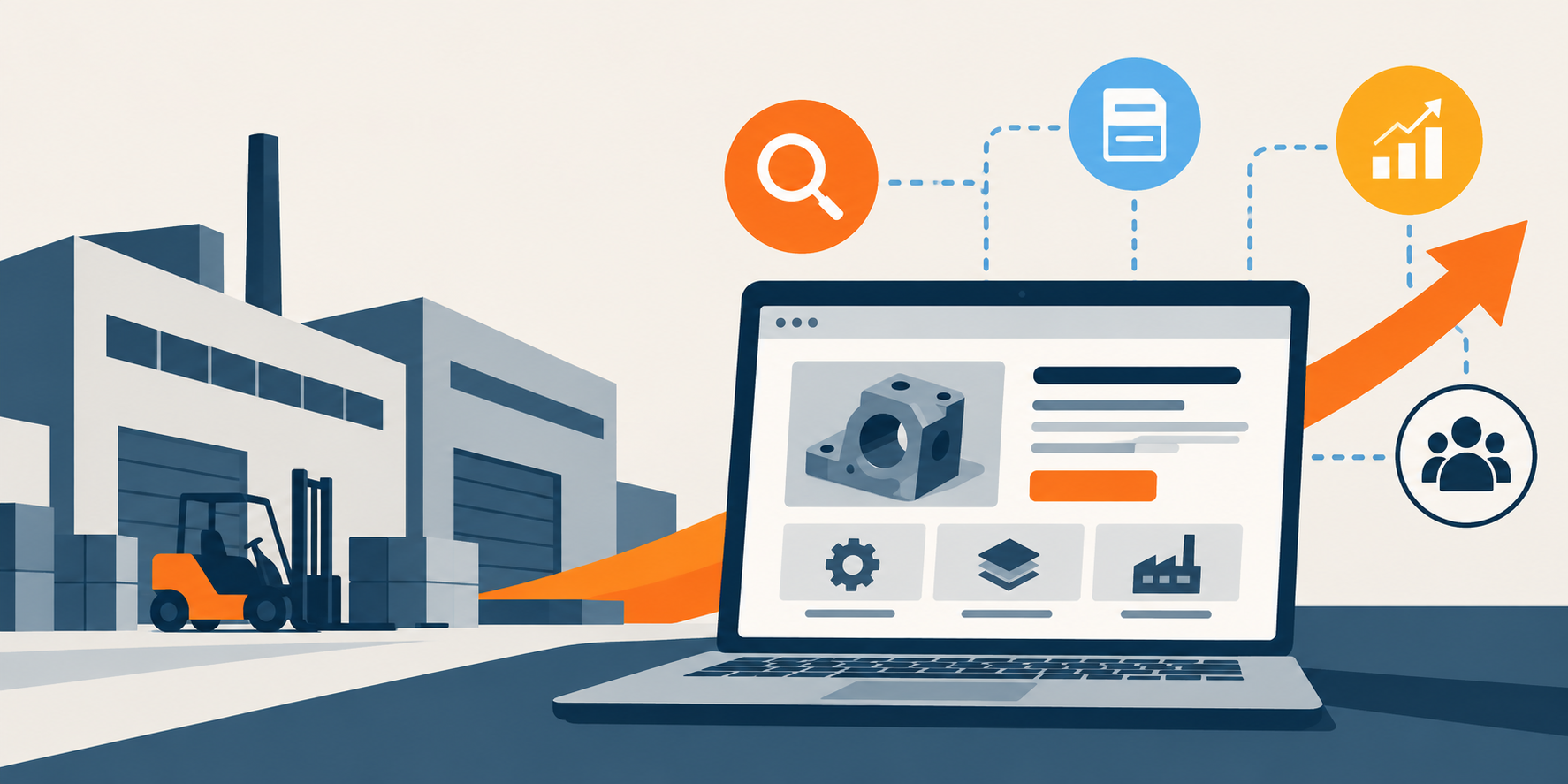
For decades, manufacturers have relied on relationships, reputation and strong sales methods to grow their businesses. Sales reps traveled from prospect to prospect with a trunk full of brochures, product catalogs, samples and years of industry knowledge. Trade shows provided opportunities to meet potential customers, demonstrate products and build relationships that could lead to long-term business.
For many manufacturers, that approach worked for a long time.
The way businesses research suppliers, evaluate products and make purchasing decisions has changed dramatically. Yet many manufacturers haven't adapted their strategies to keep pace with how customers research and buy.
Manufacturing companies have invested heavily in technology and equipment to improve their operations, yet many continue to rely on the same sales tactics that built their businesses decades ago. Their websites often serve as little more than digital brochures, while their sales teams continue putting miles on the road to generate new business.
Traditional sales tactics still have their place, but today's buying process often begins long before a potential customer speaks to a salesperson. Manufacturers that understand this shift have an opportunity to reach new audiences, strengthen their sales efforts, and win more business.
Your Website Should Be More Than a Digital Brochure
Ask a manufacturer what their website does for their business, and you'll often hear some variation of the same answer: It tells people who we are, what we make and how to contact us. This is a start, but a modern manufacturing website has the potential to do much more.
Think about the knowledge your best salespeople bring to the table. They understand your products, their applications, the industries you serve and the problems your customers are trying to solve. They know what sets your company apart and how to address questions that come up throughout the buying process. Your website should communicate that same level of knowledge and expertise.
A well-developed manufacturing website can serve as a salesperson that's available around the clock. It can provide potential customers around the world with detailed product information, technical specifications, application examples and answers to common questions.
It should also communicate what makes your company worth considering. A buyer visiting your website should be able to understand your capabilities, the problems you solve and why your products or services may be the right fit for their needs.
And unlike traditional printed materials, your website can be updated almost instantly as your products, capabilities and services evolve.
With all that potential, there's still one major challenge. Your website can only help generate business if potential customers can find it.
If You Build It, They Won't Necessarily Come
One misconception we often see in manufacturing marketing is that launching a new website will automatically generate more leads. A manufacturer invests in a website redesign, updates its product photography, adds information about its capabilities and waits for inquiries to start coming in. Months later, little has changed.
The old saying, "If you build it, they will come," may have worked in the movies, but it doesn't work in digital marketing.
Consider how a purchasing manager or engineer might begin looking for a new supplier. They may search for a specific product, research materials, compare manufacturing processes or look for a company with certain capabilities or certifications.
Much of that research happens before they ever contact a potential supplier. If your company isn't showing up during that process, those buyers may be finding and evaluating your competitors instead.
This is where search engine optimization (SEO), paid advertising, content marketing and other digital strategies play an important role. As buyers increasingly turn to AI-powered search tools for information and recommendations, manufacturers also need to consider how their content is being discovered and presented through these platforms.
Getting found online requires a strategy that connects your business with the right buyers. That starts with understanding your audience and what matters to them.
Understand Your Audience and What Matters to Them
Manufacturing purchasing decisions often involve several people, each with different responsibilities, priorities and concerns.
An engineer evaluating a component may be focused on technical specifications, performance and compatibility. A purchasing manager may be more concerned with pricing, lead times and supplier reliability. An operations manager might be looking for ways to improve efficiency or reduce downtime. An executive approving the purchase may be evaluating the overall investment and its impact on the business.
All of these individuals may influence the same purchasing decision, but the information they need can be very different.
Developing buyer personas helps manufacturers identify their target audiences, understand their challenges and recognize what influences their decisions. From there, you can build messaging that speaks directly to their needs.
For example, a manufacturer promoting a new component to engineers may benefit from technical content explaining its performance and applications. That same manufacturer may need to emphasize reliability, availability and long-term value when communicating with purchasing professionals.
Some buyers are just beginning to research a problem. Others are comparing solutions or narrowing down potential suppliers. By the time they're ready to request a quote, they may have already spent considerable time educating themselves.
Your marketing should support that research with relevant content at each stage. Educational articles, product comparisons, technical resources, case studies and application examples can help answer questions and demonstrate your expertise.
The more useful information you provide throughout the buyer's research process, the more opportunities you have to build familiarity and trust before the first sales conversation.
Reach the Right People Through the Right Marketing Channels
Once you understand your audience and the information they're looking for, the next step is determining how to reach them. Different marketing channels serve different purposes, and the right combination will depend on your products, industries, customers, and sales cycle.
SEO helps potential customers discover your company when they're actively searching for products or solutions. Paid advertising can increase visibility for specific capabilities and reach buyers who may be further along in their decision-making process.
Social media platforms like LinkedIn can help manufacturers connect with industry professionals, share expertise and stay visible to potential customers.
Email marketing, industry publications, trade shows, video, direct mail and traditional advertising can also support your efforts depending on where your audience spends its time.
The important part is having a strategy that connects these channels and keeps your messaging consistent.
Think about how someone might first become familiar with your company. They could see an advertisement in an industry publication, come across one of your LinkedIn posts, or find an article on your website while researching a technical question. A few weeks later, they may return to review your products or capabilities. When they're ready to contact a supplier, they're already familiar with your company.
When your marketing channels work together, each interaction helps reinforce your expertise, build familiarity and keep your company top of mind when buyers are ready to make a decision.
How Marketing Helps Your Sales Team Win More Business
For manufacturers, one of the biggest benefits of a coordinated marketing strategy is the impact it can have on sales.
Consider two scenarios:
In the first, a salesperson reaches out to a prospect who has never heard of the company. The conversation starts with an introduction, an explanation of what the manufacturer does and an attempt to establish credibility.
In the second, the prospect has already visited the company's website, reviewed its capabilities, read about its products and seen examples of its work.
Which conversation do you think will be more productive?
The second prospect already has some understanding of the company and what it offers. They've had an opportunity to educate themselves and may already recognize how its products or services could meet their needs. That familiarity can make a significant difference when the sales conversation begins.
Your salespeople can spend more time discussing specific applications, answering technical questions and helping prospects determine the right solution. They're entering conversations with buyers who may already have a level of confidence in your business.
Marketing also keeps your company visible during longer sales cycles. Even if prospects aren't ready to purchase today, continued exposure to your content and messaging can build familiarity and make future sales conversations more productive.
Measure Marketing Success by Its Impact on Business
Digital marketing gives manufacturers valuable insight into how potential customers find and interact with their business.
Website traffic, search rankings and social media engagement can help indicate whether your marketing is reaching people. But manufacturers also need to understand how those activities contribute to actual business opportunities.
Are visitors exploring your product and capability pages? Are they downloading technical resources or requesting quotes? Are those inquiries coming from companies that fit your ideal customer profile? And ultimately, are those leads turning into customers?
Tracking this information helps manufacturers identify which marketing efforts are generating meaningful results and where improvements may be needed.
For example, if certain products or industries consistently generate qualified inquiries, you may want to invest more in content and campaigns targeting those opportunities.
If your website receives traffic but produces few inquiries, there may be opportunities to improve your messaging, calls to action or the information available to visitors. Your sales team can also provide valuable insight into what prospects are asking, what concerns come up during conversations and what information buyers need before making a decision.
Combining that feedback with marketing performance data allows you to continually refine your strategy and focus your resources where they can have the greatest impact.
The Opportunity for Manufacturers Moving Forward
Your next customer may already be searching for the exact product you manufacture or the specialized capabilities your company provides. They may be comparing suppliers, researching technical requirements, or developing a shortlist of companies to contact.
Will they find your business during that process?
Manufacturers that invest in a strong website, understand their audiences, and develop a coordinated marketing strategy can reach potential customers earlier and support them throughout their decision-making process.
When these efforts work alongside your sales team, they help create more informed prospects, stronger sales conversations, and greater opportunities to win new business.
At TKG, we help manufacturers build digital strategies that make it easier for buyers to find them, understand their capabilities and recognize their value. Let's talk about how we can help your business compete and grow.