


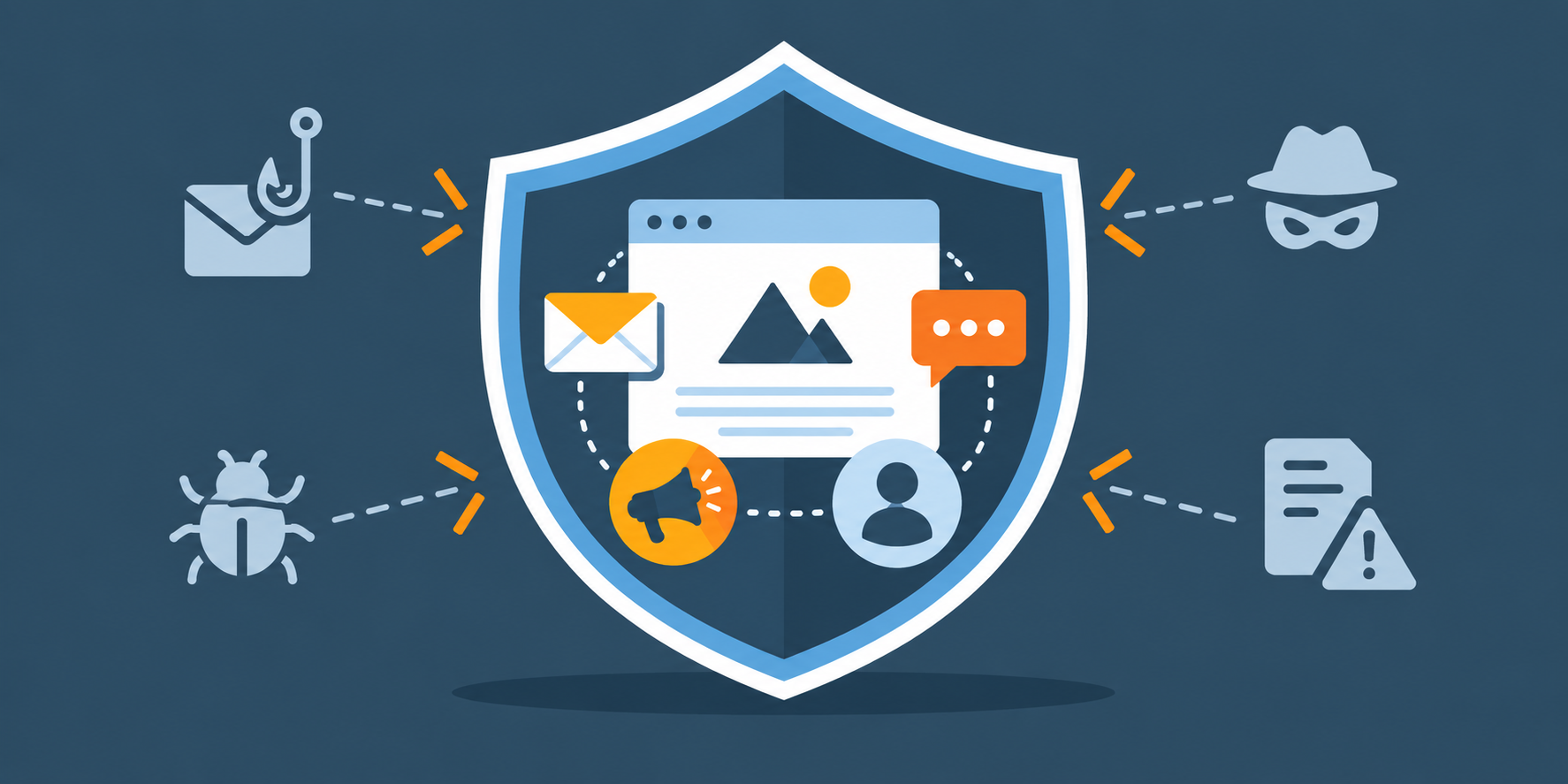
For years, cybersecurity was considered an IT problem. Firewalls, antivirus, passwords, backups and patches were things the IT department worried about.
Marketing had a completely different job: build the brand, attract customers, create great experiences and establish trust.
That separation doesn't work anymore because cybersecurity now plays an important role in protecting a company's reputation. That makes it a marketing issue, too.
Marketing Builds Trust. Cybersecurity Protects It.
Think about how much effort companies put into building a trusted brand. Years of great customer service, advertising, community involvement, social media, reviews, content, thought leadership and customer relationships all contribute to a simple belief: "This is a company I can trust."
A cybersecurity incident can challenge that belief almost overnight. Customers don't necessarily understand the technical details of a breach. They don't care which firewall failed, which vulnerability was exploited or whether an employee clicked the wrong link. They care about something much simpler: "Can I trust this company with my information?"
That's not just an IT question. It's a brand question.
Your Email Domain Is Part of Your Brand
Here's a simple example. Imagine a customer receives an email that appears to come from your company. It has your company name, your logo and maybe even the name of someone they know. The message asks them to update payment information or click a link, except the email didn't actually come from you.
From an IT perspective, we might start talking about email authentication, domain spoofing, phishing, SPF, DKIM and DMARC. But your customer doesn't know any of that. They just know they received a fraudulent email with your name on it.
That makes email security a brand protection issue. The same domain marketing puts on advertisements, business cards, websites and social media is also something cybersecurity needs to protect.
Customers Are Paying More Attention to Security
Security is becoming part of the buying process as organizations are increasingly asked about their cybersecurity practices before customers will do business with them.
- Do you use multi-factor authentication?
- How do you protect customer information?
- Do you have cybersecurity insurance and a disaster recovery plan?
- How do you manage third-party vendors?
- Have you experienced a breach?
In B2B relationships, questions like these frequently appear in vendor assessments, contracts, RFPs and cybersecurity questionnaires. Security is becoming another way customers evaluate whether an organization is trustworthy.
That creates an opportunity. Companies that take cybersecurity seriously don't necessarily need to keep it behind the scenes. In the right circumstances, "We take protecting your information seriously" can become part of the value proposition.
That's both a cybersecurity statement and a marketing statement.
A Breach Becomes a Marketing Crisis Very Quickly
Consider what happens after a significant cybersecurity incident.
The technical team starts investigating, but it doesn't take long before leadership, legal, insurance, customer service, public relations and marketing are involved.
Someone needs to communicate with customers, update the website, respond to questions and monitor social media. The company needs to explain what happened without creating additional confusion or fear. And eventually, it needs to rebuild confidence.
That's why cybersecurity incident response can't stop at restoring systems. Organizations should also think about how they will protect and restore customer trust.
Your Website Is Another Security Boundary
Marketing often owns or heavily influences the company website, but today's websites are complicated technology platforms. They can include content management systems, plugins, analytics, advertising platforms, forms, CRM integrations, payment systems, chat tools and dozens of third-party services. Every one of those connections can potentially introduce risk.
That doesn't mean companies should stop using them. It means marketing and IT need to work together when new technology is added to the website. The conversation shouldn't simply be, "Will this help us generate more leads?" It should also include, "What information does this platform collect, and how are we protecting it?"
AI Is Raising the Stakes
Artificial intelligence is creating another area where marketing and cybersecurity overlap.
Marketing teams are often some of the earliest adopters of AI tools. Employees can generate content, analyze customer information, summarize documents, create images, research competitors and automate marketing processes in seconds.
These tools can save a lot of time, but they can also create opportunities for unintended data exposure.
- What happens when someone uploads a customer list into an AI platform?
- What if an employee includes confidential information in a prompt?
- Which AI platforms are approved?
- How is company information being used?
- Who reviews AI-generated content before it represents the brand?
These aren't reasons to avoid AI. They're reasons for marketing, IT, security and leadership to establish the rules together.
Security Can Become a Competitive Advantage
Cybersecurity isn't only about preventing bad things from happening. Strong cybersecurity can also help win business.
Imagine two companies offering similar services at similar prices. One can clearly demonstrate that it protects customer information, uses modern security practices, trains employees, maintains backups and disaster recovery capabilities, and has a plan for responding to incidents.
Those practices can make a difference when a potential customer is deciding who to trust. Good cybersecurity can become part of a company's competitive advantage.
IT and Marketing Need to Talk More Often
None of this means marketing should suddenly become responsible for managing firewalls, or that IT should start approving marketing campaigns. It means the two teams are protecting different sides of the same thing: marketing builds the brand, and cybersecurity protects the trust behind it.
Organizations should bring marketing, IT, leadership and security together earlier when selecting technology, launching websites, adopting AI, collecting customer information and planning incident response. These decisions increasingly affect both the technology a company relies on and the customers who interact with it.
Cybersecurity isn't happening quietly in the server room anymore. It's happening in inboxes, websites, customer portals, cloud applications, mobile devices, social media and nearly every other digital interaction customers have with your company. When cybersecurity fails, customers don't just see an IT problem.
They see your brand.
Protecting that brand starts with making sure the technology behind it is protected, too. If you're not sure where your organization stands, TKG can help you identify cybersecurity risks, strengthen your IT environment and build a security strategy that supports your business for the long term.